 Industrial Park Unit

Growing with a Changing Indonesia: EJIP’s Vision for the Future Role of Industrial Parks
―From a Place to Operate to a Partner in Solving Challenges. EJIP President on a Changing Indonesia and the Future of Industrial Parks―
Indonesia continues to undergo significant change, driven by rapid urban development, digitalisation, and the expansion of its consumer market. In central Jakarta, some districts now display a level of development that rivals, and in some respects surpasses, that of Tokyo. Younger generations consume global cultural trends and digital almost simultaneously with their counterparts in Japan. At the same time, companies from China and South Korea are expanding their presence, intensifying competition and reshaping the business landscape.
As Indonesia’s economy continues to grow, so too do the expectations placed on businesses operating in the country.
One of the key challenges facing companies today is responding to increasingly stringent environmental regulations and sustainability requirements.
In this interview, Yoshida, who has served as President of East Jakarta Industrial Park (hereinafter, EJIP) since 2022, shares his perspectives on the changes taking place across Indonesia, the evolving needs of tenant companies, the unique value that EJIP provides, and the role industrial parks will be expected to play in the years ahead.
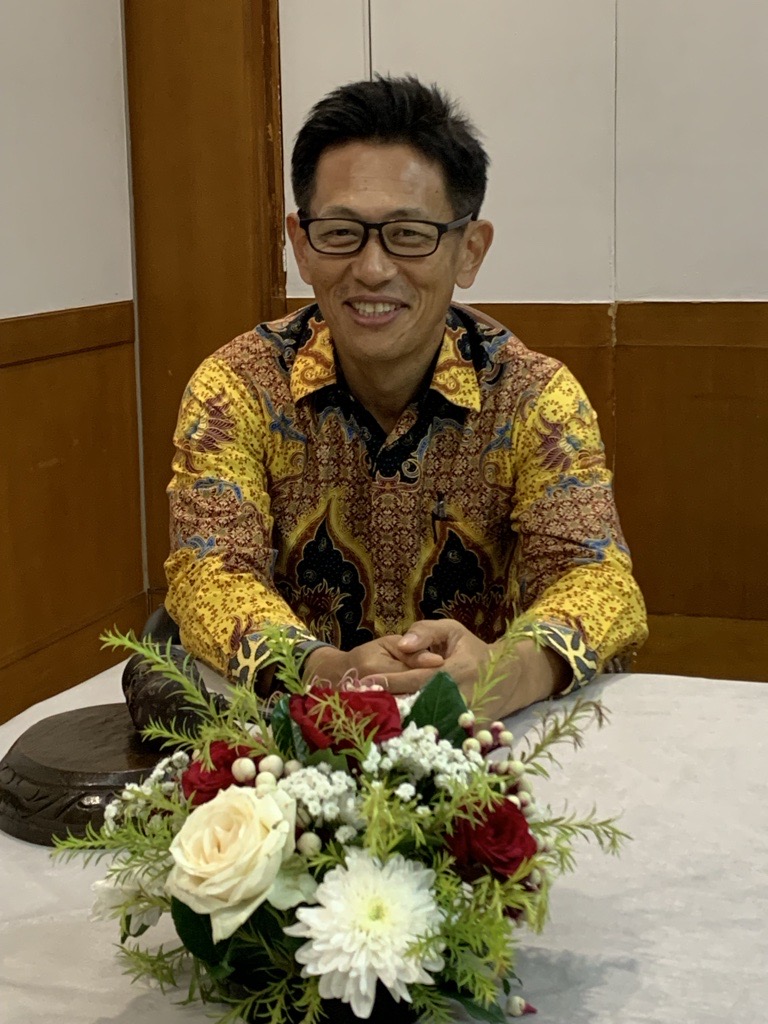
Photo: Yoshida, President of EJIP, wearing a traditional Indonesian batik shirt
|
Name |
Kenichiro Yoshida |
|
Career |
After joining Sumitomo Corporation in 1995, he worked in the steel products business, overseeing the trading of construction materials, automotive steel sheets and steel pipes, as well as the management of associated companies. During his career, he held positions in Hiroshima and Nagoya, and overseas in Saudi Arabia, the United States and China. He joined the industrial park business in 2021 and was appointed President of EJIP in 2022 as Sumitomo Corporation’s sole secondee. He is responsible for the company’s business performance and overall management. |
|
‘EJIP cannot solve every challenge directly. Instead, we aim to stand alongside tenant companies when issues arise and help connect them with the right people and organisations. We see our role as a trusted partner, helping tenants find the support they need. |
Theme 1: Discovering the Appeal of Indonesia Through the Eyes of an Expatriate
To begin, could you introduce yourself and tell us about your current role?
After joining Sumitomo Corporation in 1995, I built my career in the steel products business, handling construction materials, automotive steel sheets and steel pipes, while also overseeing the management of affiliated companies. During my career, I held assignments in Hiroshima and Nagoya in Japan, and overseas in Saudi Arabia, the United States and China.
In 2021, I transferred to the industrial park business and was appointed President of EJIP in 2022 as Sumitomo Corporation’s sole secondee to the company. Today, I am responsible for EJIP’s business performance and overall corporate management.
In addition to overseeing the day-to-day operation of the industrial park, I work to ensure that tenant companies can continue their operations smoothly and sustainably. This includes supporting them in addressing a wide range of challenges, including environmental compliance, labour-related issues and security matters.
Did living and working in Indonesia reveal any differences from the impressions you had formed in Japan, or lead to any discoveries?
I had visited Indonesia several times on business trips since around 2004, so there were no major surprises when I was first posted here. However, after living and working in the country and building close relationships with local people, I realised that Indonesians hold Japan and the Japanese people in even higher regard than I had expected.
I have also found certain similarities between Indonesians and Japanese. For example, people do not always express their thoughts directly. In that sense, it can take time to build relationships before gaining a true understanding of what someone thinks. I often feel that there are common elements in the way people communicate and develop trust.
At the same time, living in Indonesia has given me a different perspective on Japan. It has made me feel that Japan may not be making the most of the goodwill and trust it enjoys here. Compared with the strong interest Indonesians have in Japan, I believe that understanding of and interest in Indonesia within Japan remains relatively limited.
Given the considerable goodwill towards Japan and the advantage this provides, I feel it is a great pity that we are not making fuller use of them.
Have there been any moments when you particularly felt the growth of the Indonesian market or shifts in its industries?
Overall, I am continually impressed by the pace of Indonesia’s development. Even compared with my visits a few years ago on business trips, the landscape has changed dramatically. In some areas of central Jakarta, there are districts that I would consider even more developed than parts of Tokyo. At the same time, I feel that the reality of today’s Indonesia is still not widely recognised in Japan.
Another significant change has been the growing presence of Chinese and South Korean companies. Their influence now extends beyond manufacturing into a broad range of sectors, including consumer goods, digital content, and mobile applications. As a result, the competitive environment in Indonesia has become increasingly diverse and dynamic.
One experience that brought this change home to me was discovering that some of EJIP’s younger employees follow the same Japanese VTuber as my daughter in Japan. Despite living in different countries, young people are enjoying the same content almost simultaneously. It made me realise that the time lag that once existed before Japanese culture and information reached overseas audiences has largely disappeared.
Indonesia’s transformation can be seen not only in the development of its cities and industries, but also in the speed with which culture and information now cross borders. I believe this is another important aspect of the country’s remarkable growth.
|
‘The goodwill towards Japan in Indonesia is a significant advantage for Japanese companies. I believe there is still great potential to build on that goodwill’ |
Theme 2: Changes in the Indonesian Market and Evolving Business Needs
What changes have you seen in the needs and interests of Japanese companies operating in Indonesia in recent years?
As Indonesia continues to develop, the standards expected of businesses have risen significantly. One example is compliance with environmental regulations. As regulations become more stringent and complex, tenant companies are increasingly looking to EJIP for support in addressing environmental matters.
In the past, there was tremendous value simply in having the necessary infrastructure in place and being able to operate manufacturing facilities smoothly. Today, however, companies are expected not only to maintain stable operations but also to manage the regulations and risks associated with those operations effectively.
I believe this shift reflects Indonesia’s evolution from a simple manufacturing base into a market where more sophisticated business management and governance are increasingly required.
Are there any industries or sectors that have become particularly prominent in Indonesia in recent years?
One area that has seen remarkable growth in recent years is the data centre industry. As digitalisation accelerates and Indonesia’s market continues to expand, data centres are emerging as an increasingly important sector in the country.
Among Japanese companies, there has also been a noticeable shift from traditional manufacturing towards more consumer-oriented industries, including the restaurant business, as well as so-called ‘soft industries’ such as services and content-related businesses. Today, it is common to see Japanese conveyor-belt sushi restaurants, ramen shops and steakhouse chains across the city. Japanese products, services and content are becoming an increasingly familiar part of everyday life in Indonesia.
At the same time, Chinese and South Korean companies are strengthening their presence in the market. In particular, Chinese companies have expanded their influence beyond manufacturing into consumer-facing businesses and the content sector.
Indonesia is growing not only as a manufacturing base but also as a consumer and digital market. As a result, the range of industries and business models represented by companies entering the market is becoming increasingly diverse.
|
‘As Indonesia develops, the standards expected of businesses are rising. Companies increasingly require more practical support, including assistance in navigating environmental regulations.’ |
Theme 3: What EJIP Can Achieve
With many industrial parks operating in Indonesia, what do you see as EJIP’s distinctive strengths?
First and foremost, it is our track record of more than 36 years of operations. Over that time, we have supported a wide range of tenant companies and helped them address numerous challenges. I believe the depth of experience we have built up over the years is one of EJIP’s greatest strengths.
Another key differentiator is our hands-on approach to supporting tenant companies. Compared with many locally operated industrial parks, we place a strong emphasis on understanding tenants’ needs and providing tailored support. Our role extends beyond maintaining facilities and infrastructure. We also serve as a point of consultation for the various operational challenges companies may encounter and help connect them with the support they require.
In the environmental field, we operate a laboratory within the industrial park that has obtained ISO certification, enabling us to conduct environmental testing and analysis on-site. When it comes to environmental support, our focus is not simply on initiatives such as assisting with solar panel installations or reducing CO₂ emissions. Rather, we believe EJIP’s unique value lies in helping companies navigate increasingly complex environmental regulations by providing testing, diagnostic assessments and practical advice.
Ultimately, EJIP’s strengths are built on two foundations: our decades of experience and our ability to continuously evolve our support services in line with the changing needs of tenant companies.
What role does EJIP play in helping tenant companies maintain stable operations over the long term?
EJIP does not become directly involved in tenant companies’ business activities or commercial transactions. Rather, our role is to act as a trusted adviser, providing support and guidance when companies encounter operational challenges.
Tenant companies may face a wide range of issues, including environmental compliance, labour matters, and security concerns. For companies entering Indonesia for the first time, it is not always clear where to seek advice or how best to respond to such challenges. Drawing on our extensive experience, EJIP provides practical guidance and, where appropriate, helps connect companies with the relevant organisations and experts who can offer further support.
Could you share a memorable example of your support for a tenant company?
One case that stands out in my memory involved a tenant company facing a labour-related issue. It was the first time the company had faced such a situation, and they were unsure where to seek advice or how to respond.
Drawing on our experience, EJIP advised the company on the appropriate channels for consultation and supported its engagement with relevant stakeholders, including negotiations with the police. While it was a new challenge for the tenant company, EJIP had dealt with similar situations in the past. By leveraging that experience, we were able to help prevent the issue from escalating and support the company in maintaining stable operations.
This experience reinforced for me the value of EJIP’s long history and the depth of expertise we have built over the past 36 years. Because we have been operating for so long, we are able to assess situations quickly when issues arise and guide companies towards the most appropriate course of action. In my view, that is one of EJIP’s greatest strengths, and a form of value that cannot easily be captured by figures or facilities alone.
|
‘The ability to draw on accumulated experience and prevent problems from escalating is one of the greatest strengths of a long-established industrial park.’ |
Theme 4: The Future of EJIP
Have there been any moments during your time at EJIP when you felt glad to be doing this work?
The moments that stand out most are when tenant companies say ‘Thank you’ or ‘That really helped us’. Being able to see directly that our support has made a difference is something I find incredibly rewarding.
At the same time, I also feel a sense of satisfaction when nothing particularly noteworthy happens and the day ends without any issues arising at tenant companies. In industrial park management, the absence of problems is itself a sign that the operating environment is being managed effectively.
Supporting companies when challenges arise and safeguarding the stability of day-to-day operations when they do not are equally important parts of our role. I believe both are essential responsibilities of managing an industrial park.
How do you see the role of EJIP evolving in the years ahead?
In the early years of EJIP, there was tremendous value in simply providing an environment where companies unfamiliar with Indonesia could operate smoothly. At that time, many businesses were entering the country with limited local knowledge or experience. Today, however, most companies have access to a certain level of information and have accumulated experience of their own. As a result, simply enabling companies to operate as usual is no longer a defining advantage for an industrial park.
Looking ahead, I believe EJIP will be expected to play a greater role in understanding the challenges faced by tenant companies and helping them reduce the costs and risks associated with their operations. Those challenges may relate to information and communications technology, security, human resources, or other areas. To determine where support is needed most, we must continue engaging closely with tenant companies and gaining a deeper understanding of their evolving needs.
Rather than providing a uniform set of services to every tenant company, it is important to identify the specific issues each tenant company faces and develop support tailored to those needs. I believe this more individualised and customer-focused approach will become increasingly important for industrial parks in the future.
Finally, considering these changes, what would you like EJIP to focus on going forward?
The areas I would particularly like EJIP to focus on are environmental management and security. By addressing these challenges as an industrial park and helping to reduce the costs and risks faced by tenant companies, we can make an even greater contribution to their business operations.
Environmental regulations are expected to become increasingly sophisticated and complex in the years ahead. By leveraging EJIP’s laboratory and testing capabilities, together with the expertise we have accumulated over many years, we aim to support tenant companies in responding effectively to these evolving regulatory requirements. Security is another area where industrial parks have an important role to play, as maintaining an environment in which companies can operate with confidence is essential to business continuity.
As markets evolve and business needs change, the services expected of industrial parks must also evolve. At EJIP, we intend to continue listening closely to tenant companies and their concerns. Rather than simply providing a place to operate, we aspire to become a partner that helps reduce the challenges each company faces and supports their long-term success.
|
‘Helping tenant companies reduce their costs and risks in the areas of environment and security is a key part of EJIP’s future role.’ |