 Industrial Park Unit

Supporting Manufacturers’ Green Transformation through Renewable Energy
―Thang Long Industrial Park’s Frontline Initiatives for Decarbonization―
As decarbonization accelerates across the manufacturing sector, the use of renewable energy has become an important management priority. Thang Long Industrial Park supports tenant companies in adopting renewable energy through a range of solutions, including rooftop solar power generation. In this interview, we speak with Lisa Iguchi, who is responsible for the renewable energy business, about the park’s specific support services and its vision for the future.
|
Name |
Lisa Iguchi |
|
Career |
Joined Sumitomo Corporation in 2020 and was assigned to the Industrial Park Unit. Seconded to Thang Long Industrial Park in 2024 and engaged in sales activities. Since 2026, serving as Manager of the Renewable Energy Office and working on renewable energy initiatives. |
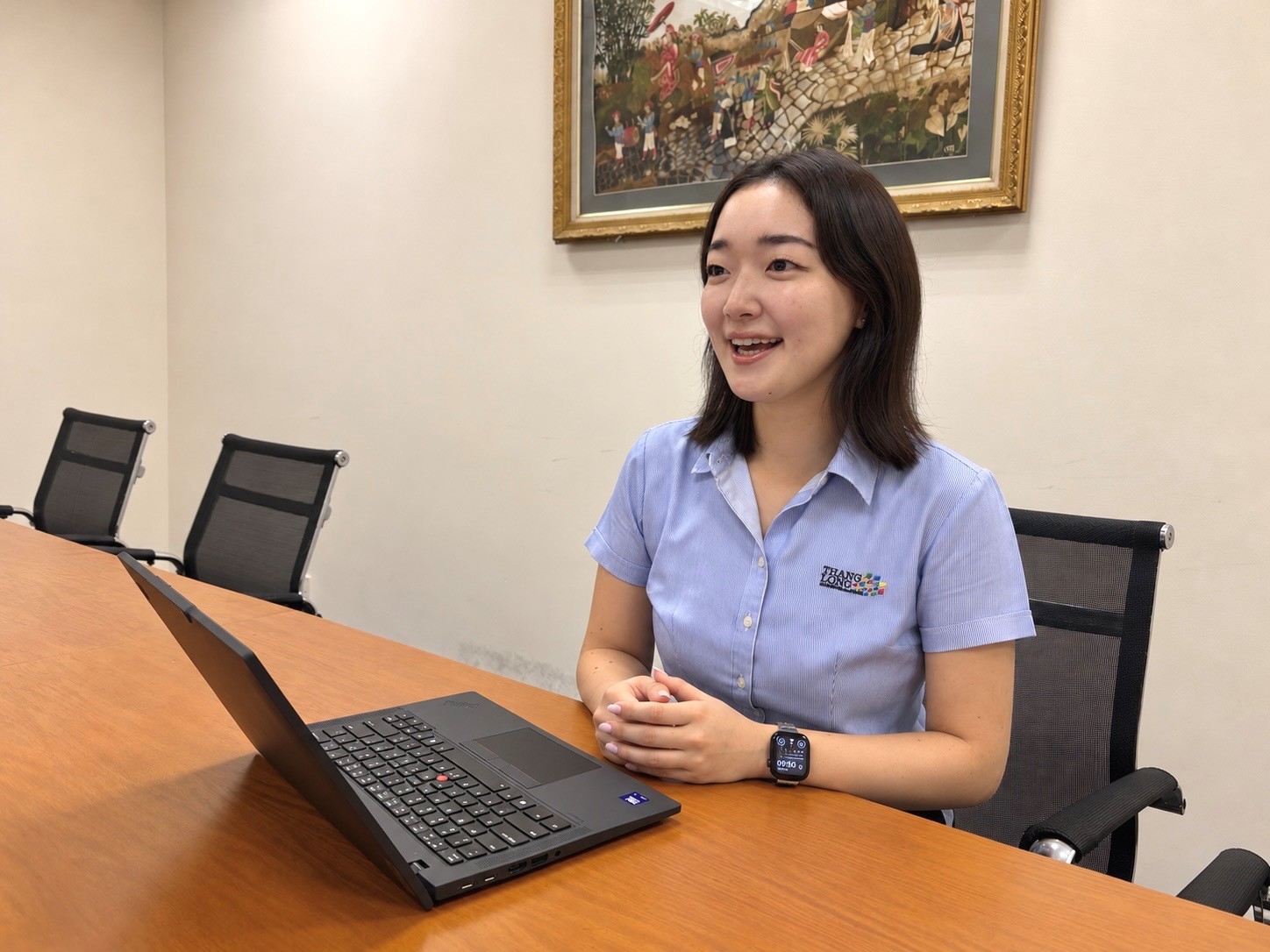
Q1. Please introduce yourself and tell us about your current responsibilities at Thang Long Industrial Park.
I have been seconded to Thang Long Industrial Park since October 2024. I currently work in the Renewable Energy Office, which was established in June 2026, where I support the decarbonization efforts of companies operating in the industrial park.
My main responsibilities cover sales and construction management for rooftop solar power systems installed on factory roofs, operation of the facilities after power generation begins, support for procuring renewable energy certificates,* and sales related to Direct Power Purchase Agreements (DPPA).* Our role does not end with installing equipment. We support tenant companies until they are able to use renewable energy on an ongoing basis.
* Renewable energy certificate: A certificate representing the environmental value of electricity generated from renewable energy sources.
* DPPA (Direct Power Purchase Agreement): A contract or arrangement under which an electricity consumer procures power directly from a renewable energy producer.
Q2. Why did Thang Long Industrial Park begin working on rooftop solar power at an early stage?
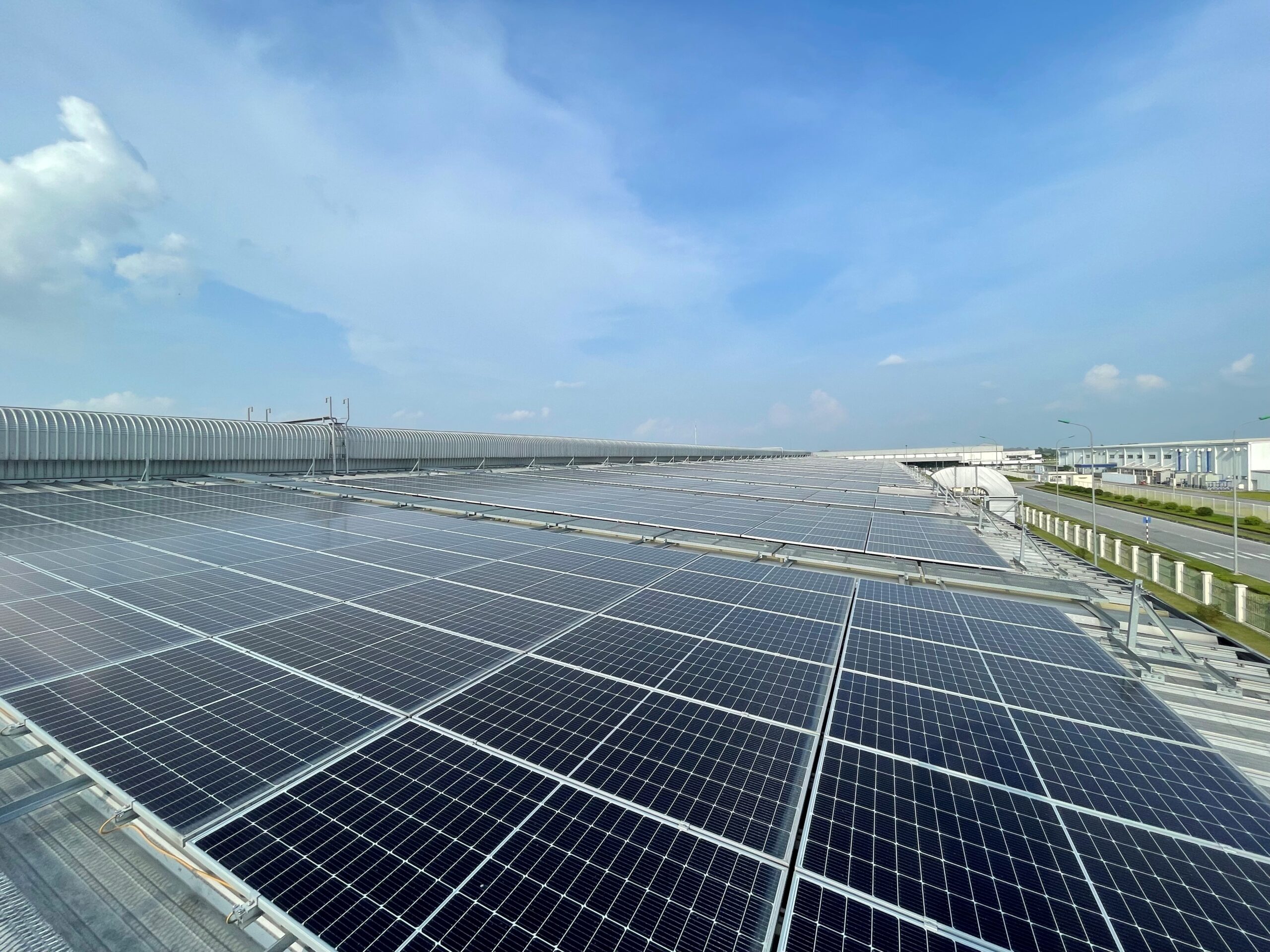
Thang Long Industrial Park has been engaged in the rooftop solar power business since 2021. Rooftop solar makes it possible to increase renewable energy generation by using existing factory roofs without requiring additional land.
There were two main reasons for starting this initiative. First, as Vietnam aims to achieve carbon neutrality by 2050 under its national power development plan, we wanted the industrial park to contribute to that goal.
Second, an increasing number of tenant companies expressed a desire to use renewable energy. In recent years, tenant companies have faced growing requests not only from within their own organizations but also from their customers asking them to switch the electricity used in manufacturing to renewable sources. The need for the industrial park to help such tenant companies respond to these requests was a major factor behind the launch of the business.
Q3. What kinds of inquiries are you receiving from tenant companies regarding GX, or Green Transformation, and decarbonization?
We are seeing a particular increase in inquiries from tenant companies handling electronic components that want to raise the share of renewable energy in their electricity consumption. This is because finished-product manufacturers and customers are seeking to reduce greenhouse gas emissions not only within their own operations but across the entire supply chain.
In some cases, tenant companies set targets such as using 100% renewable electricity in the future or increasing the renewable energy share to at least 50% by 2030, and they consult us on how to achieve those targets. However, it may be difficult to cover all of a factory’s electricity demand with rooftop solar alone. As a result, we are also receiving more inquiries about how best to combine solar power, renewable energy certificates, and DPPA.
Q4. What benefits do manufacturing customers expect when considering the introduction of solar power?
The greatest benefit is the ability to respond to requests from tenant companies and supply-chain partners regarding the use of renewable energy. In manufacturing, not only product quality and price but also the volume of greenhouse gas emissions generated during production is becoming an important factor in business relationships. Using solar-generated electricity can reduce consumption of conventional grid electricity and help lower indirect CO2 emissions associated with manufacturing processes.
Some tenant companies also participate in international initiatives such as RE100 (Renewable Electricity 100%).* They may also want to communicate their environmental efforts clearly to customers, business partners, employees, and other stakeholders by reporting solar installation results and power generation volumes in sustainability reports.
* RE100 (Renewable Electricity 100%): A global corporate initiative under which companies aim to meet 100% of the electricity used in their operations with renewable energy.
Q5. What are the most common concerns among manufacturing customers considering the installation of rooftop solar power systems?
The main concerns are the initial investment, investment recovery, and post-installation management. If a company purchases a rooftop solar system itself, it must initially bear the cost of the panels and related equipment. The company then recovers the investment through benefits such as lower electricity costs. However, power generation varies depending on the factory’s electricity consumption, operating hours, and the size and structural strength of its roof, so the investment may not be recovered within the anticipated period.
In addition, installing a rooftop solar system is not the end of the process. Continued stable generation requires operation and maintenance, or O&M, including monitoring generation status, periodic inspections, cleaning, and troubleshooting. Under the services provided by Thang Long Industrial Park, the industrial park makes the capital investment and undertakes operation and maintenance. Tenant companies can therefore use solar-generated electricity without making an initial investment or establishing their own specialized management structure.
Q6. How does Thang Long Industrial Park support companies considering the introduction of solar power?
First, we introduce the renewable energy services offered by Thang Long Industrial Park and confirm the tenant companies’ reasons and objectives for adopting renewable energy. These objectives vary by company and may include responding to requests from customers, meeting internal decarbonization targets, or increasing the proportion of renewable energy used.
Next, we assess whether solar panels can be installed safely on the factory roof. Roof load-bearing capacity is particularly important. If installation is feasible, we estimate the system capacity that can be installed and the expected amount of power generation based on factors such as the roof’s area and shape.
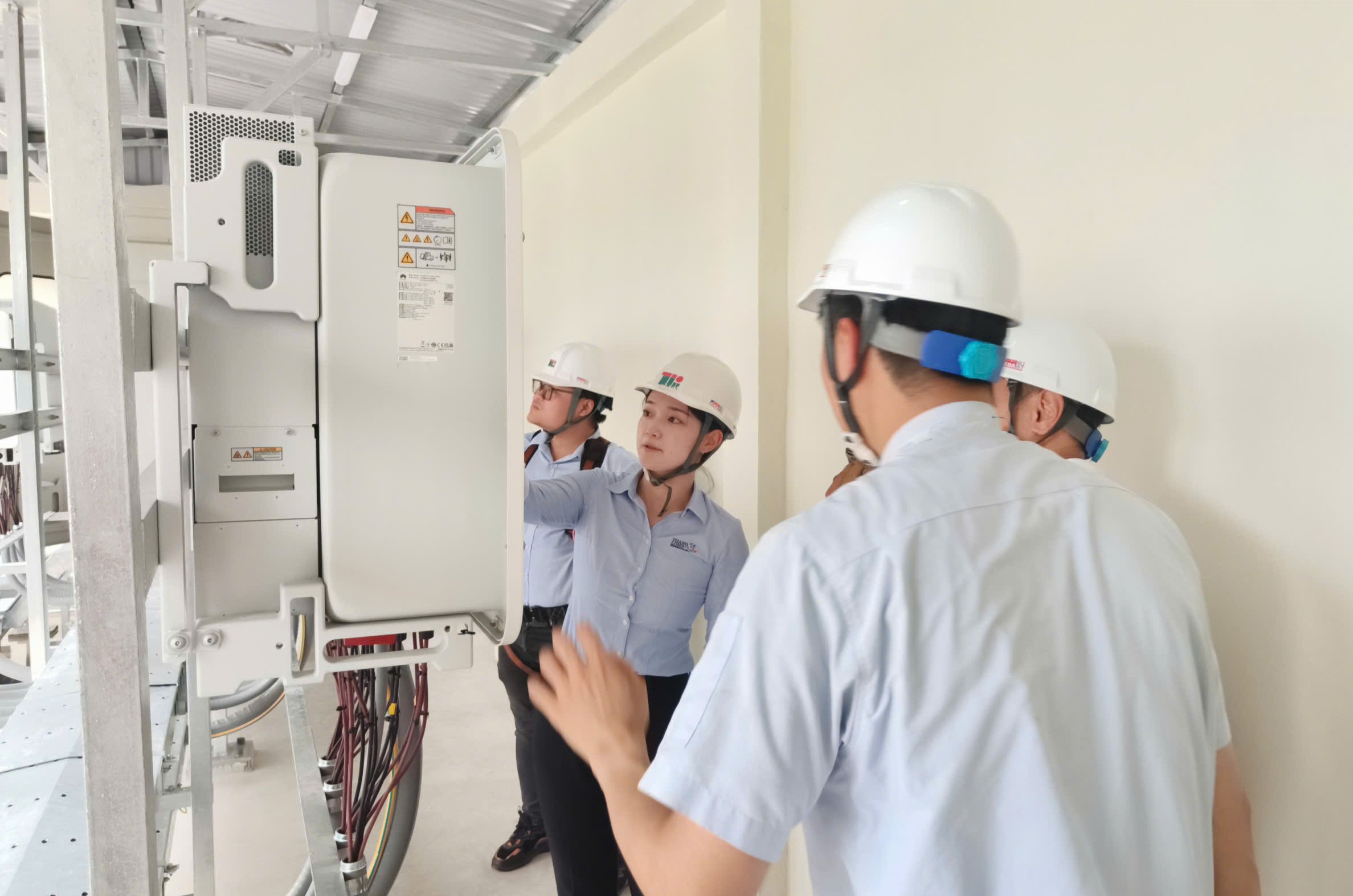
Based on the estimate, we prepare a specific proposal. Before construction begins, we explain the construction work and safety measures together with the contractor. We then provide integrated support through construction, trial operation, and the start of power generation, and continue to monitor generation and manage the equipment after installation.
Q7. Compared with installing a rooftop solar system independently, what are the advantages of using Thang Long Industrial Park’s service?
A major advantage is that customers do not need to bear either the initial investment or the ongoing operation and maintenance costs. If tenant companies own the equipment themselves, they need budgets and specialized personnel for monitoring, inspections, and troubleshooting. Under Thang Long Industrial Park’s model, the industrial park owns and manages the equipment, with in-house engineers and operators providing continuous support.
Thang Long Industrial Park also monitors the electricity demand of all tenant companies on a daily basis and holds both a substation and an electricity distribution license. This enables us to operate from the perspective of ensuring a stable power supply to factories by combining rooftop solar generation with electricity supplied by the regular power utility. If panel damage or abnormal generation occurs, our on-site structure allows us to investigate and respond promptly, enabling customers to focus on their core manufacturing operations.
Q8. Are there any services or examples that have surprised tenant companies or been particularly well received?
The fact that we provide integrated support from proposal and design through construction and post-commissioning operation is itself a distinctive feature of an industrial park. One service that has been particularly well received is our online monitoring system, which we provide free of charge.
The system allows tenant companies to check in real time how much electricity is currently being generated and what percentage of the factory’s total electricity demand is being supplied by solar power. By visualizing the amount of electricity generated, customers can monitor the benefits of the system on a daily basis.
Some tenant companies display the monitoring screen at the main entrance of their factories to introduce their environmental initiatives to visiting customers and business partners. The system is therefore used not only for equipment operation and management but also to communicate environmental information externally.
Q9. In addition to rooftop solar power, what other GX initiatives is Thang Long Industrial Park pursuing?
In addition to rooftop solar power, we are working on support for procuring renewable energy certificates, floating solar power, and DPPA. Each plays a different role, so it is important to combine them according to each tenant company’s objectives.
Since 2024, we have worked with a Sumitomo Corporation Group company to support the procurement of renewable energy certificates for electricity demand that cannot be covered by rooftop solar alone.
We are also currently installing floating solar power facilities on a regulating pond within the industrial park. The electricity generated will be used as a renewable energy source for the industrial park as a whole rather than for a specific customer.
For DPPA, we are examining a scheme to procure renewable electricity directly from renewable energy power plants and supply it to interested tenant companies. Because electricity may be procured from power plants outside the industrial park without being constrained by available roof area, DPPA can be a promising option for tenant companies seeking a higher renewable energy share.
Q10. What value can GX initiatives provide to companies considering entering the park and to existing tenants?
The first value is that we can provide practical support within the industrial park to help each tenant company achieve its renewable energy and decarbonization targets. For tenant companies newly entering Vietnam, having renewable energy procurement options available in addition to land and buildings can make it easier to plan future business operations. Existing tenants also benefit from being able to consult the industrial park when they receive new renewable energy requests from their customers.
The second value is the contribution to power supply stability. Power shortages have been an issue in northern Vietnam during the summer, and planned outages and electricity conservation requests occurred in 2023. Increasing power sources within the industrial park, including rooftop solar, can reduce the amount of electricity purchased from the external grid during the daytime. Demonstrating that the industrial park as a whole contributes to electricity conservation during normal periods can also help reduce risk during power shortages and support stable operations for tenant companies.
Q11. From a GX perspective, what kind of industrial park would you like Thang Long Industrial Park to become?
We aim to become an industrial park that can offer renewable energy solutions tailored to each tenant comapny’s objectives and electricity usage by combining multiple options, including rooftop solar power, renewable energy certificates, floating solar power, and DPPA.
The roof area, electricity consumption, operating hours, and target renewable energy share differ from factory to factory. Rather than proposing the same equipment to every customer, it is therefore important to combine multiple measures, such as first covering part of a factory’s electricity needs with rooftop solar and supplementing the shortfall with renewable energy certificates or DPPA.
By utilizing the Sumitomo Corporation Group’s network and expertise in the power sector, we want to make Thang Long Industrial Park’s strength its ability to provide comprehensive support, covering not only the installation of renewable energy equipment but also the procurement of electricity and environmental value, facility operations, and visualization of post-installation benefits.
Q12. Finally, what message would you like to share with current tenants and companies considering entering Vietnam?
For many years, Thang Long Industrial Park has continued to evolve its services in response to tenant needs and changes in society while emphasizing the stable supply of conventional electricity and infrastructure. In recent years, the use of renewable energy has become more than an environmental activity. It is now an important management issue that can affect the continuation of business with tenant companies and the competitiveness of overseas operations.
At the same time, renewable energy includes multiple options, such as rooftop solar power, renewable energy certificates, and DPPA, and companies considering it for the first time may find it difficult to know where to begin. At Thang Long Industrial Park, we work with customers to identify the most suitable approach based on their objectives and factory conditions, and support them from introduction through operation.
We will continue to place importance on the stable supply of conventional electricity and infrastructure while also offering support tailored to customer needs in advanced areas such as renewable energy. If you have any concerns about operating a business in Vietnam, not only about renewable energy, please feel free to consult us. As an industrial park, we will continue to support our tenant companies while working closely with them.