 Industrial Park Unit
TRACK DESIGN INDIA PRIVATE LIMITED
A Solid Foundation for Manufacturing Growth: Why Shinsho Corporation Chose Chennai and ORIGINS
We spoke with Keiji Sakuta, General Manager of TRACK DESIGN INDIA PRIVATE LIMITED, a joint venture between Shinsho Corporation and its Korean partner, about the background to the company’s entry into India, the reasons for choosing Chennai and ORIGINS Chennai Industrial Park, its current operations, and its future outlook.
TRACK DESIGN INDIA PRIVATE LIMITED
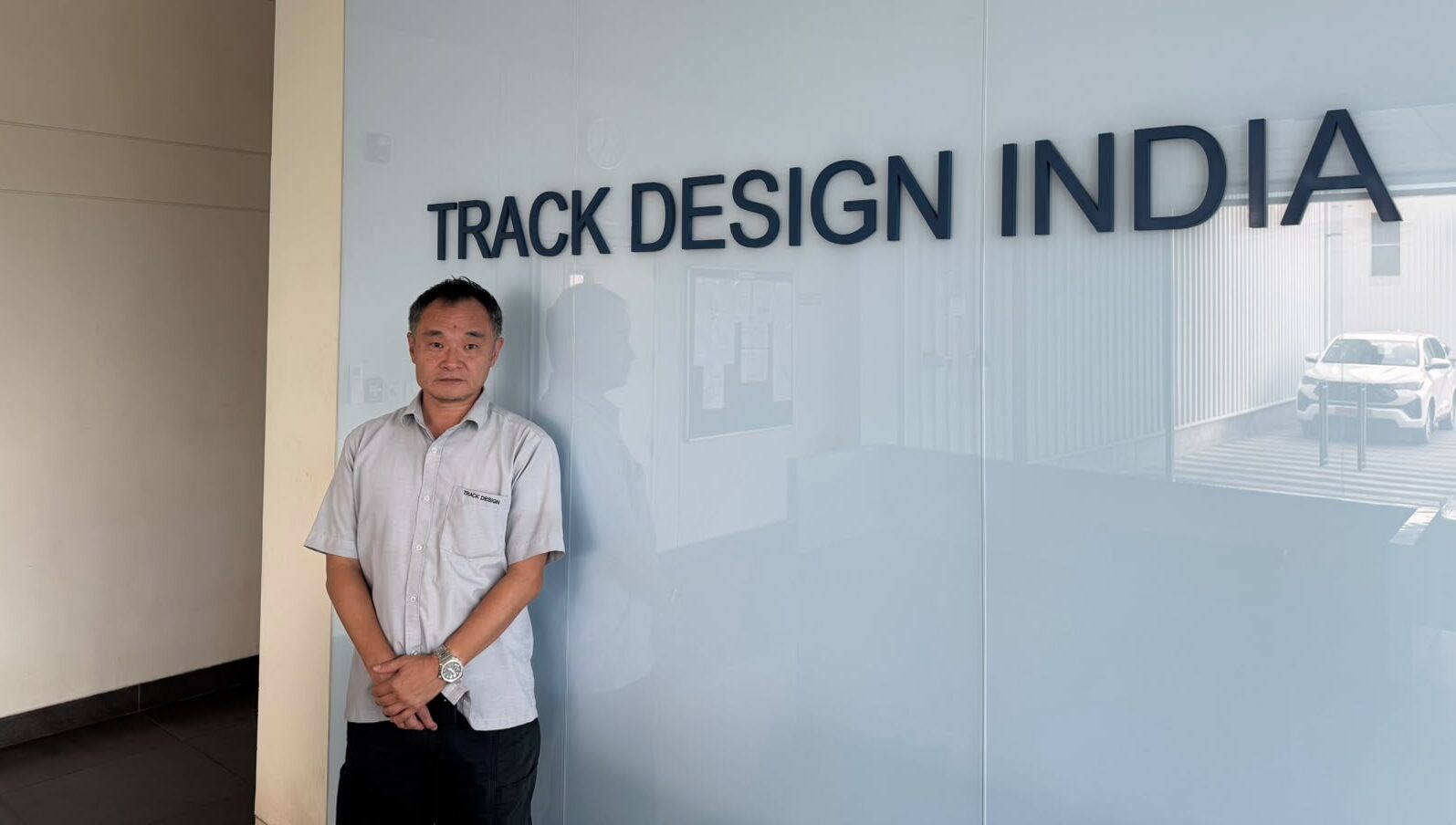
Established in 2021 as a joint venture between Shinsho Corporation and Daechang Forging Co., Ltd., the company manufactures undercarriage components for construction machinery, primarily track chains. Shinsho Corporation serves as a core trading company of the Kobe Steel Group and is engaged in sales, procurement, and business investment in a broad range of fields, including steel, machinery, and materials. Daechang Forging Co., Ltd. is a manufacturer of forged products and undercarriage components for construction machinery based in Gimhae, South Korea,
supplying track chains, rollers, idlers, sprockets, and other products to global markets.
Keiji Sakuta, General Manager
Oversees all aspects of factory operations at TRACK DESIGN INDIA PRIVATE LIMITED and led the establishment of the company’s production system in India from the ground up. He continues to drive the company’s expansion through ongoing capacity additions and organizational enhancements.
Theme 1: Background to Entering India and Selecting Chennai
What prompted you to consider entering the Indian market?
Our company originally imported and sold in Japan construction machinery components manufactured by a Korean supplier. That supplier held a strong market share, and the catalyst for considering expansion into India was a request from an Indian customer asking whether the products could be manufactured locally rather than imported from Korea.
At the same time, India was attracting attention in the construction machinery industry as a market with strong future growth prospects, and our Korean partner was also interested in entering India. Against this backdrop, we established Track Design India as a joint venture with our Korean partner. Shinsho Corporation already had a presence in India, but this business was launched as a separate project.
When selecting the location, which factors did you prioritize, such as talent, supply chains, the import and export environment, and infrastructure?
The most important factor was the location of our customers. At the time, Shinsho Corporation’s key customers were located around Sri City, while our partner’s key customers were located around Pune. We therefore narrowed the candidate locations down to Chennai and Pune.
After comparing the two locations, we selected Chennai based on an overall assessment of import and export convenience, access to talent, and logistics infrastructure. Pune was also a strong candidate, but visitors from Japan and South Korea would need to take a connecting domestic flight, and we felt the living environment for expatriates would be more demanding. Chennai offered an advantage in terms of accessibility.
How did you assess Chennai in comparison with other regions, and what ultimately led to your decision?
One of the decisive factors was the explanation provided by the expatriate representative at ORIGINS Chennai Industrial Park.
The location and infrastructure were explained clearly, as were the park’s future potential and support framework, and all stakeholders responded positively.
Theme 2: ORIGINS Chennai Industrial Park
How did you first learn about ORIGINS Chennai Industrial Park?
When we began considering expansion into India in 2019, we conducted research on industrial parks. As we compared Chennai and Pune with our Korean partner, we also asked the local staff of Shinsho Corporation India to undertake research. Through that process, we learned about ORIGINS Chennai Industrial Park and visited the site.
What impression did you have when you first visited ORIGINS Chennai Industrial Park?
To be candid, my impression was, “Why not choose ORIGINS?”
We visited after inspecting other candidate locations, including Sri City and Pune, and I remember that our first impression was extremely positive. We highly valued the well-developed road environment and the progress made in site preparation. Its relatively convenient access from the city and the ease of travel for business visitors were also attractive.
What conditions did you prioritize when selecting an industrial park, and how did you evaluate ORIGINS Chennai Industrial Park against those criteria?
We particularly prioritized convenient access for business visitors, completed site preparation, proximity to a port, and the potential for future infrastructure expansion.
For a company engaged in imports and exports, access to the port was especially important. We were also attracted by the explanation that, as more Japanese companies entered the area, the surrounding environment, including utilities and commercial facilities, would be further developed. We now hope to see more dining options and restaurants in the area.
Theme 3: Current Operations and Future Outlook
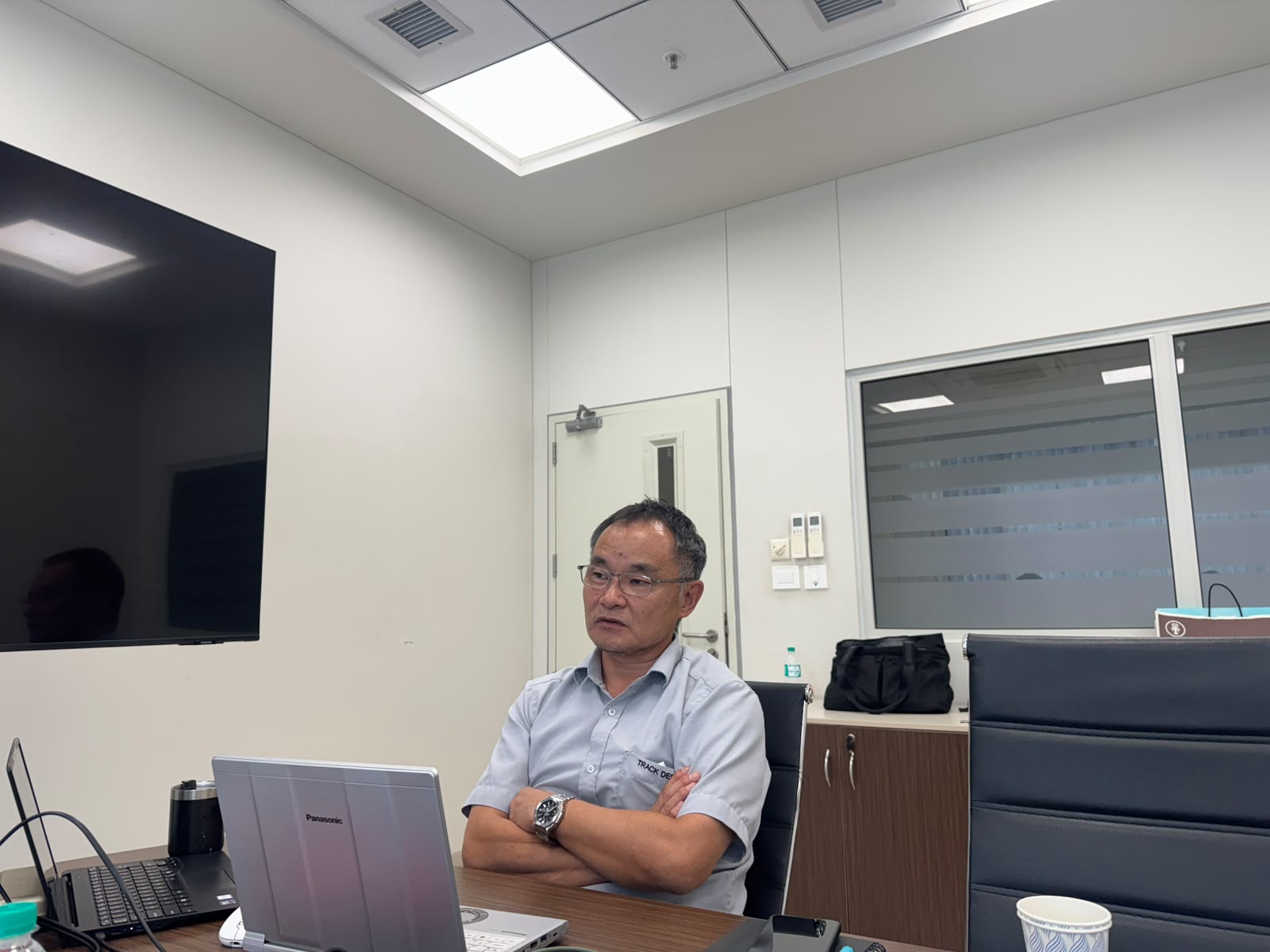
Could you describe the current operating status of the factory? Has the business in India progressed as expected?
The manufacturing line installed in the first phase is currently operating at nearly full capacity.
Next fiscal year, we plan to increase production by expanding our equipment and introducing new machinery from South Korea. We expect approximately ten months from equipment installation to production ramp-up and aim to begin full-scale production increases in the second half of 2027. As the next step, we are also considering an extension of the factory building within the current site.
Discussions with customers have already given us visibility into future demand growth, and our current production capacity may eventually become insufficient. India’s construction machinery market continues to expand, and we are seeing increased demand from our major customers. However, switching from production in South Korea to production in India requires an approval process for each customer, so the transition has progressed somewhat more slowly than initially expected.
How is life in Chennai? Were there any differences between your expectations before arriving and your experience of actually living there?
In daily life, there are times when differences from Japan, including food, can be challenging. I also find certain aspects inconvenient, such as not being able to drive freely myself and the long commuting time.
That said, after living here for three and a half years, Chennai has also become a place where I feel at ease when I return from Japan. Compared with northern India in particular, I feel reassured by the level of safety and have rarely felt personally at risk.
To the extent you can share, what is your outlook for the business in India?
We plan to raise production capacity in stages while continuing capital investment and factory expansion.
We are already beginning to see that our production capacity may be insufficient. To firmly capture the growth of India’s construction machinery market, we intend to continue strengthening our production system and expanding the business.
Theme 4: A Message to Companies Considering Expansion into India and Chennai
Within the Indian market, what types of industries do you believe Chennai is particularly well suited to attract?
Chennai has developed such a strong concentration of automotive and manufacturing industries that it is often referred to as the “Detroit of South Asia.”
For this reason, I believe Chennai is highly suitable for manufacturers and companies with a high export ratio. Its proximity to the port is a major advantage for companies targeting not only the domestic Indian market but also exports. On the other hand, for businesses focused solely on the domestic Indian market, other regions such as Pune may also be strong options. It is important to select the optimal location based on the company’s business model.
Based on your own experience of establishing operations in India, what message would you offer to companies considering expansion into India regarding Chennai’s appeal and potential?
Chennai has a relatively mild climate, a good level of safety, and an environment in which expatriates can live comfortably.
It is also comparatively easy to secure talented people, and I find people in southern India generally calm and cooperative. The region has many industrial parks and is highly attractive for manufacturing companies.
Personally, I sometimes sense in Indian companies and talent the same unity and teamwork that Japanese companies once possessed. The average age is also young, and I believe the region has very high long-term potential. For manufacturers considering expansion into India, Chennai is likely to be one of the leading options.