 Industrial Park Unit
OMRON HEALTHCARE MANUFACTURING INDIA PRIVATE LIMITED
OMRON's New Manufacturing Base in Chennai: Tackling India's Healthcare Challenges
We spoke with Takuto Iwanaka, Managing Director of OMRON HEALTHCARE MANUFACTURING INDIA PRIVATE LIMITED, about the background to the company’s entry into India, the reasons for choosing Chennai and Origins Chennai Industrial Park, its current operations, and its future outlook.
OMRON HEALTHCARE MANUFACTURING INDIA PRIVATE LIMITED
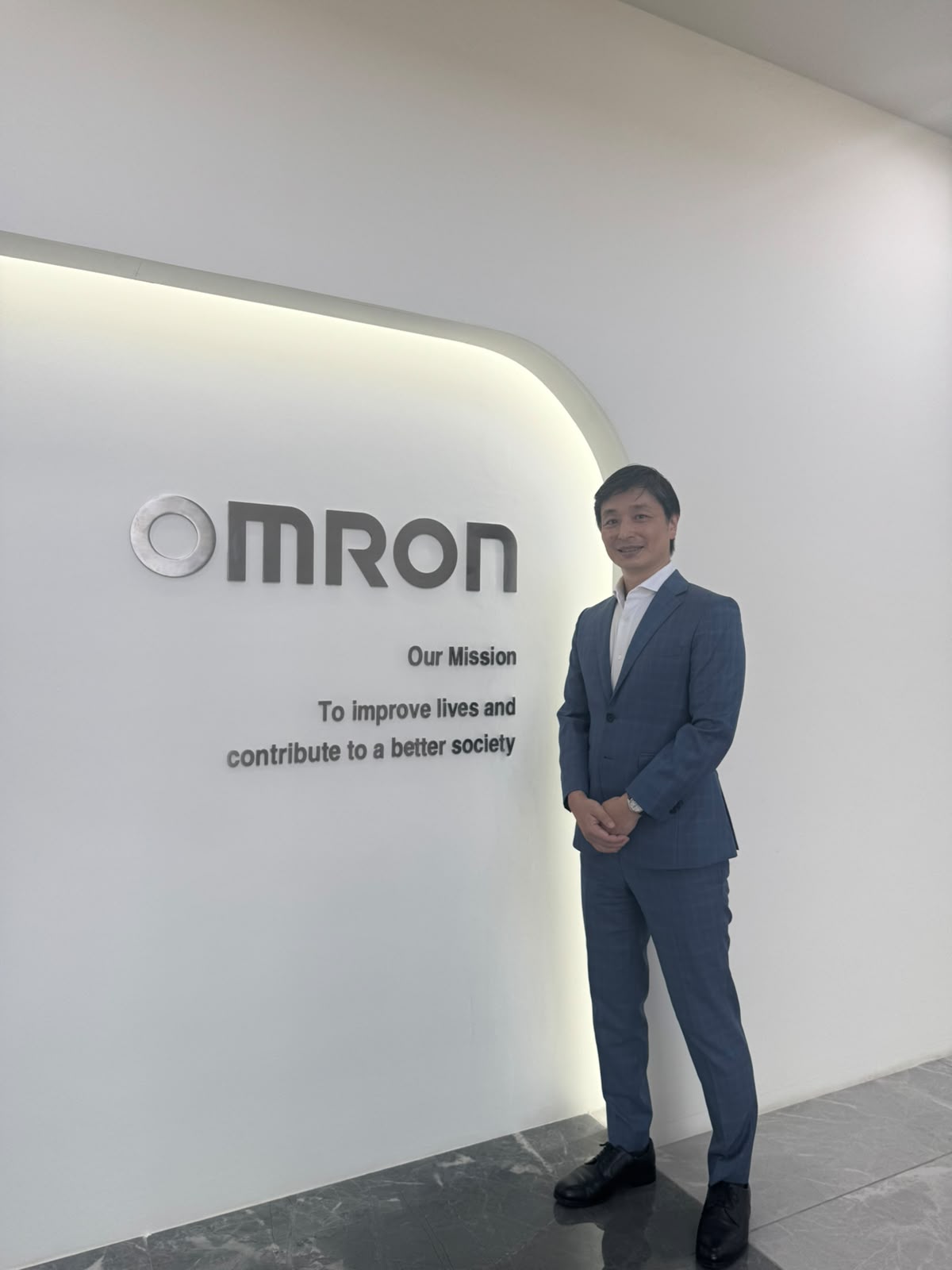
Established in July 2022, this Indian subsidiary manufactures medical devices, primarily blood pressure monitors. Its parent company, OMRON HEALTHCARE Co., Ltd., was established in July 2003 as a wholly owned subsidiary of OMRON Corporation and is headquartered in Muko, Kyoto Prefecture. The company develops and markets healthcare devices globally, with blood pressure monitors, nebulizers, and low-frequency therapy devices as its core products, along with body composition monitors, electric toothbrushes, and activity monitors.
Takuto Iwanaka, Managing Director

Based in India since the establishment of OMRON HEALTHCARE MANUFACTURING INDIA PRIVATE LIMITED, he oversees all aspects of factory management, from production and quality control to sales strategy, human resources, and organizational development. He has led the operation from its initial launch, taking continuous responsibility for building and growing the business foundation.
Theme 1: Background to Entering India and Chennai
As a company with global operations, what led OMRON to decide to enter India?
There were two main reasons for our decision to enter India.
The first was the scale and growth potential of healthcare demand in India. Many people in India suffer from chronic conditions such as hypertension, diabetes, and asthma. At the same time, the number of doctors relative to the population is insufficient, and awareness of health management is not yet as widespread as it could be. As a result, household blood pressure monitor penetration remains low, and many people are unaware that they have hypertension. This creates risks to health and life that could be avoided if people were aware of their condition.
Addressing this social issue directly reflects our mission: ‘To advance health and empower people worldwide to live life to the fullest.’
The second reason was our global production strategy. Until now, we had supplied the Indian market from production sites outside India. However, given the rapid growth in demand expected in India, we concluded that it was important to establish a system capable of supplying the market promptly from a local manufacturing base. A base in India also enables us to supply Europe, the Middle East, Africa, and other markets with shorter lead times, giving the location significant strategic value.
When selecting the site, which factors did you prioritize, such as talent, supply chains, the import and export environment, and infrastructure?
Although we manufacture medical devices, we still depend on imports for electronic components. We also plan to export our products. We therefore placed particular emphasis on logistics, including proximity to ports, with both imports and exports in mind.
Securing highly capable technical talent is also essential to operating a manufacturing plant.
In addition, we considered the presence of suppliers and partners with whom we could collaborate to increase local sourcing and localize our production processes.
Against that background, how did you assess Chennai, and what were the decisive factors in your final choice?
Chennai has several major ports and is close to an airport, providing excellent conditions for imports and exports. Its many engineering universities also make it easier to secure strong talent. In addition, the city’s established manufacturing cluster provides access to a broad supplier base.
Tamil Nadu is also highly proactive in attracting investment and has a well-developed support framework for companies entering the state. Another decisive factor was Chennai’s relatively favorable living environment within India, which makes it an accessible and comfortable city for expatriates and business travelers.
Theme 2: Origins Chennai Industrial Park
How did you first learn about Origins Chennai Industrial Park?
When considering our entry into India, we used both internal and external resources to research industrial parks across the country. Origins Chennai Industrial Park emerged as one of the candidates through that process.
What ultimately led you to choose Origins Chennai Industrial Park, and what made it attractive compared with other industrial parks?
The stability of the infrastructure was a major deciding factor.
Flooding and power outages can pose business continuity risks in India, but Origins has well-developed drainage infrastructure and flood-control measures. Although this was before we began operations, we were able to confirm the site’s effective drainage during the cyclone in December 2023. The relatively stable power supply was another attractive feature.
We were also reassured by the ability to gather information in advance from Japanese companies already operating in the park. In addition, unlike many industrial parks, Origins has Japanese expatriate staff and a well-established support structure. This was OMRON’s first experience establishing its own factory, and our knowledge of India was limited, so having an environment where we could seek advice in Japanese was a major advantage.
In 2023, OMRON also moved into East Jakarta Industrial Park, our industrial park in Indonesia. Having used multiple industrial parks operated by the Sumitomo Corporation Group, what common strengths do you value?
In fact, we did not initially evaluate or consider the parks on the basis that they were part of the Sumitomo Corporation Group or because another OMRON business had already moved into one of them.
Each business division selected its site independently. Nevertheless, both the Indonesian and Indian businesses ultimately chose industrial parks operated by the Sumitomo Corporation Group. I believe this outcome reflects the competitiveness of each park’s location and services.
Theme 3: Current Operations and Future Outlook
Could you describe your current operations? Is the business in India progressing as anticipated?
We have begun mass production of blood pressure monitors and have already started shipping them to the Indian market. Going forward, we plan to increase production volumes, add nebulizer production, and eventually develop the site into an export base serving the European market.
What is your impression of the actual living environment in Chennai?
Many people may have a negative image of India, but after living here, I have found Chennai to be a very comfortable city.
Compared with major cities such as Delhi, Chennai feels safer, has cleaner air, is close to the sea, and offers a full range of essential amenities, including hospitals and shopping malls. The open and approachable character often associated with South India also supports smooth communication with employees. English is widely spoken, the Japanese community is active, and there is a full-time Japanese supplementary school, making it easy for expatriates and their accompanying families to exchange information.
Challenges include the lack of direct flights to Japan and the potential for long commuting times when factories are located outside the city.
To the extent you can share, what is your outlook for the business in India?
Our first priority is to expand the blood pressure monitor business. We also intend to broaden our product lineup, including nebulizers, and increase both our contribution to and presence in the Indian market.
Alongside production for the domestic Indian market, we aim to develop the site over time into an export base serving Europe and other global markets.
Theme 4: A Message to Companies Considering Expansion into India and Chennai
What should manufacturers considering an expansion into India address first?
The most important step is to develop a well-considered cost strategy.
India is not necessarily a low-cost country in which to establish a factory. Dependence on imported materials, customs duties, and other factors can result in costs exceeding initial expectations.
It is also extremely important to secure understanding and support from headquarters. Generating a profit from the first year is not easy, so the business must be developed from a medium- to long-term perspective. I believe success depends on establishing the business jointly with headquarters rather than leaving everything to the local team.
Based on your own experience, what message would you offer companies considering entering India about Chennai’s appeal and potential?
With India’s ongoing economic growth, stronger government support, and increasingly developed supplier clusters, I believe the country currently offers a highly favorable environment for manufacturers considering expansion.
Within India, Chennai is particularly well suited to Japanese companies and manufacturers. It also has a strong pool of English-speaking technical talent, making it a highly attractive location for investment.
As markets in many countries develop and mature, the experience and lessons gained from operating in a market with this scale, pace of growth, and future potential can create significant value for the growth of both the business and the organization.
I encourage everyone to visit India and experience the market and operations firsthand. If there is anything we can do to assist, please do not hesitate to contact us.