 Industrial Park Unit
Walking Alongside Our Tenants’ Success: Sumitomo Corporation’s Industrial Park Business
―The Value of a Long-Term Partner, Not Just a Seller of Land―
For any company, expanding overseas is a major decision that can shape its future. Choosing where to invest requires weighing far more than land and buildings — the investment climate, infrastructure, talent availability, regulatory approvals, and even the political, economic, and social landscape all come into play. For more than 35 years, Sumitomo Corporation has been engaged in the industrial park business, supporting the overseas expansion and growth of tenant companies across six countries in Asia. What we value most is the belief that “a contract is the beginning of a relationship,” not the end of one. Rather than simply providing land, we have worked to build an environment where tenant companies can pursue their business with confidence and continue to grow. In this article, we spoke with Shigeo Fukuda, General Manager of the Industrial Parks Unit, about his passion for the industrial park business, what sets Sumitomo Corporation apart, and his message to manufacturers considering overseas expansion.
|
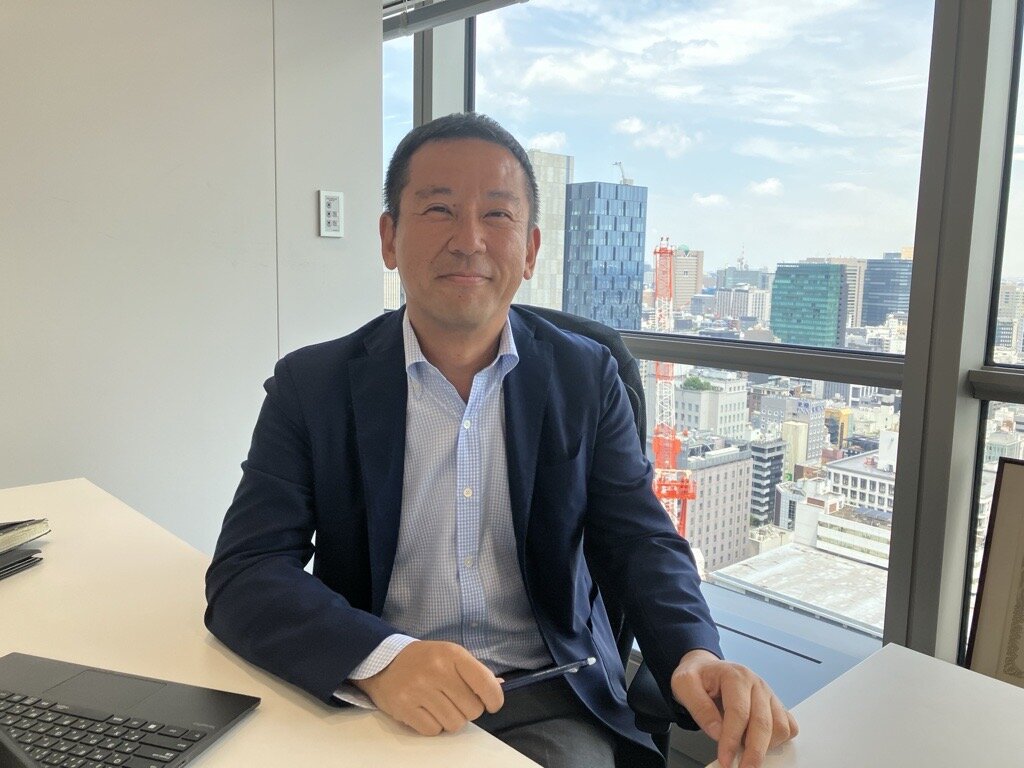
Name |
Shigeo Fukuda |
|
Career |
Joined Sumitomo Corporation in 1997. After gaining experience in the Logistics Division, he was seconded to an operating company in Germany before moving into the industrial park business in 2003. He has worked on industrial park projects in Vietnam, the Philippines, Myanmar, and other countries, building hands-on experience in sales, development, and operations. Since 2023, he has led the Industrial Parks Unit, overseeing the business as a whole. |
|
“A contract is the beginning of a relationship. Supporting the success of our tenant companies is the starting point of our industrial park business.” |
Theme 1: Roots Forged in the Field, and a Commitment to Our Tenants
Could you tell us about your career and how you came to work in the industrial park business?
After joining the company, I was assigned to the Logistics Division, where I handled exports from Japan to overseas markets. I was then seconded to a logistics operating company in Germany before transferring to the Overseas Industrial Parks Department in 2003. At the time, that department had a strong sense of unity and a distinctive energy, built on getting deeply involved on the ground to deliver results — I honestly remember being surprised when I first heard about the transfer. But through my posting at Thang Long Industrial Park in Vietnam, working across sales, development, and operations, I found myself drawn into just how interesting and profound this business is.
An industrial park is not simply real estate. It’s a business that supports tenant companies as they enter a market and begin operations, and that contributes to a country’s industrial development and job creation. Building industrial infrastructure means bringing together many stakeholders — tenant companies, government authorities, and local communities. I found that dynamic tremendously compelling.
After that, postings in the Philippines and Myanmar taught me about the challenges specific to each country, the concerns tenant companies face, and the kind of support that’s needed on the ground. The issues differ by country and by era, but the core of what we do has never changed: supporting our tenants’ success, and contributing to the prosperity and aspirations of the countries and regions where they operate. I’m just one employee, but I find great fulfillment in being involved, through this business, in the growth and success of our tenant companies — and, in turn, in contributing even a little to the development of the host country. This work also serves as a bridge between Japan and our host countries, between Japanese people and local communities. Playing even a small part in deepening those bilateral ties is one of the things that makes this business so rewarding, and it makes me happy. Looking back, I didn’t choose this business out of my own initiative, but before I knew it, more than 20 years had passed. I suppose that’s a sign of just how compelling this work is.
Is there something you’ve always valued in your relationships with tenant companies?
For manufacturers, investing overseas is a major decision that can shape the future of the company. Rather than only explaining our own industrial parks, we have always made a point of clearly conveying the investment climate, as well as the politics, economy, history, culture, and national character of the country in question, so that our customers can make investment decisions with real confidence. We also develop and operate industrial parks in six countries, which lets us propose the location best suited to a customer’s business strategy — another of our strengths. For us, attracting a tenant company isn’t the end of the job; it’s really just the beginning. What matters most is that, once a tenant has established operations, it operates stably and succeeds as a business. That’s why we make a point of speaking candidly about challenges and risks, not just the positives, as we build a relationship of trust with our customers. Seeing tenant companies expand their operations, create more jobs, and continue operating for decades — that is, above all, what brings us the greatest satisfaction.
Theme 2: Why Companies Choose Sumitomo Corporation’s Industrial Parks
The industrial park business is often seen as a real estate business. Why has Sumitomo Corporation continued in this business for so many years?
It goes back to the spirit of the people who started our industrial park business in Indonesia in 1990. Even then, the guiding idea was that “a contract is the beginning of a relationship,” and that we should contribute to the development of the countries and regions where we operate. For tenant companies to sustain stable production and grow as businesses, they need more than infrastructure like electricity, water, sewage, and telecommunications — they also need support with regulatory matters and day-to-day operations. We support our tenants’ growth through both this hard and soft infrastructure. Our tenants’ success then feeds into industrial development and job creation, and it is this virtuous cycle that is the reason we have continued in the industrial park business.
Compared with other industrial park developers, what sets Sumitomo Corporation apart?
Sumitomo Corporation’s strength lies in being a general trading company with a wide range of business areas. The industrial park business itself involves developing land, building infrastructure, and operating the park. But that’s not all our tenants need. The areas that support manufacturing — sourcing raw materials and parts, logistics, finance, and various other services — are extremely broad.
Because we are a general trading company, we don’t offer an industrial park as just a “place.” We can work with a wide range of internal divisions and partners to support our tenants’ production activities broadly. Using the industrial park as an entry point to help solve the many challenges our customers face is, I believe, a strength that other industrial park developers don’t have. We aim not only to prepare the industrial park as a “vessel,” but to create an environment within it where tenant companies can confidently expand and grow their business.
|
“It’s not about providing land and being done — it’s about walking alongside our tenants as they grow their business. That is the meaning behind Sumitomo Corporation’s work in industrial parks.” |
Theme 3: Addressing Social Issues, Decarbonization, and the Changing Face of Manufacturing
As interest in decarbonization and sustainability grows, what do you prioritize in developing and operating industrial parks?
Even before the term ESG became commonplace, we were already addressing the social issues facing the countries and regions where we operate. What’s required differs by country — addressing regional disparities in Vietnam, meeting expectations around industrialization in Myanmar, supporting industrial diversification in Bangladesh, and so on.
What we share in common is a strict commitment to regulatory compliance and to developing and operating industrial parks that surrounding communities can accept with confidence. We have steadily built up the fundamentals of this business — supplying industrial water, treating wastewater, meeting environmental standards, and managing noise, vibration, and safety. In recent years, interest in decarbonization has also grown, and we must respond to new challenges facing our tenants, such as introducing renewable energy. As the needs of society and our tenants change, I feel that the value expected of industrial parks is evolving as well.
With a weaker yen and intensifying global competition reshaping the environment for manufacturers, what are you changing in the industrial park business, and what remains unchanged?
Our philosophy for the industrial park business itself won’t change, but the range of products and services we offer needs to evolve in response to shifting business conditions, more diverse customer needs, and regulatory changes. In recent years, manufacturers’ modes of entry have also become more varied — local production for local consumption, multi-product, small-lot manufacturing, phased investment, and asset-light management, among others. That’s why it’s important for us to expand the range of options our tenants can choose from based on their own strategy: flexible development layouts, rental factories and build-to-suit facilities, mechanisms to reduce initial investment, renewable energy supply, attractive and worker-friendly environments, and richer digital services. We also want to pursue new business opportunities in new regions and areas, drawing on the knowledge we’ve built up across Southeast and South Asia.
At the same time, what we want to keep unchanged is our commitment to supporting our tenants’ production activities and contributing to their growth and success. No matter how the times or business environment change, our stance that “a contract is the beginning of a relationship” will not change.
Rising geopolitical risk and advances in AI and automation are changing how companies think about site selection. How are you responding to these shifts?
I feel that the objectives and criteria behind companies’ expansion decisions have become more diverse than ever — some prioritize abundant, low-cost labor, others are targeting a growing domestic market, and still others are focused on geopolitical risk and supply chain resilience. At the same time, as AI and automation advance, I believe the importance of stable basic infrastructure — power, water, telecommunications, and logistics — is, if anything, increasing.
Alongside continuing to provide the high-quality infrastructure needed to respond to these changes, we also want to deliver new value that strengthens our tenants’ competitiveness, such as renewable energy and digital services. Industrial parks bring together many companies and employees. I believe that going forward, industrial parks will also be expected to make the most of that concentration — fostering collaboration among tenant companies and service providers to create new business opportunities and new value.
What message would you give to executives at manufacturing companies who are considering overseas expansion?
Sumitomo Corporation’s industrial parks are home not only to large corporations but to many mid-sized and small companies as well. For companies expanding overseas for the first time, there’s no shortage of challenges to overcome — selecting a site locally, navigating regulatory approvals, securing stable infrastructure, and recruiting and developing talent, to name a few. Overseas investment is a major management decision for any company. We don’t see our job as simply providing land. From the earliest stages of considering expansion through the start of operations and beyond, we focus on creating an environment where tenant companies can pursue their business with confidence, and on supporting that business with a long-term perspective. For companies looking for a place where they can operate securely for the long term, we believe Sumitomo Corporation’s industrial parks can be a strong option.
Overseas expansion is never an easy challenge. But with a trusted partner and a stable business environment, that challenge can become a major growth opportunity. We will continue to walk alongside our tenant companies as they pursue their own challenges and success.
If you had to describe Sumitomo Corporation’s industrial parks in a single phrase, what would you say?
If I had to put it in one phrase, I’d call it “a platform for manufacturing where companies can take on new challenges with confidence.” It began as a hub for Japanese manufacturers, but today it has grown into a place where a diverse range of companies, across nationalities and industries, come together to create new supply chains and new business.
What we’re aiming for is an industrial park where our tenants feel that choosing us was the right decision. To that end, we will keep improving the quality of our infrastructure, operations, and services, and continue to provide an environment where tenant companies can focus on their business with peace of mind. We want to be the business foundation that supports our tenants.
|
Sumitomo Corporation’s industrial parks contribute to our tenants’ success and the development of the region, by providing an environment where tenant companies can take on new challenges with confidence and grow. |